

The educational landscape in Nigeria is rapidly transforming, and the adoption of Learning Management Systems (LMS) is at the forefront of this shift. With schools seeking to enhance learning experiences, streamline administrative tasks, and improve communication, LMS platforms are becoming indispensable tools in modern classrooms. This comprehensive guide explores the evolution of LMS platforms, the benefits they offer, the best features to look for, and how schools can effectively implement them in 2026.
What is an LMS and Why Should Schools Adopt It?
A Learning Management System (LMS) is software used to deliver and manage educational content, track student performance, and facilitate communication between educators, students, and parents. LMS platforms help educators create, distribute, and manage educational content, while also offering tools for grading, feedback, and assessments.
In Nigeria, the importance of an LMS cannot be overstated, especially amid the rise of digital learning, the challenges schools face with attendance tracking and paper-based records, and the demand for more interactive learning experiences. With an LMS, schools can digitize their processes, enhance student engagement, and create more efficient and transparent systems for tracking academic progress.
Why LMS is Crucial for Nigerian Schools
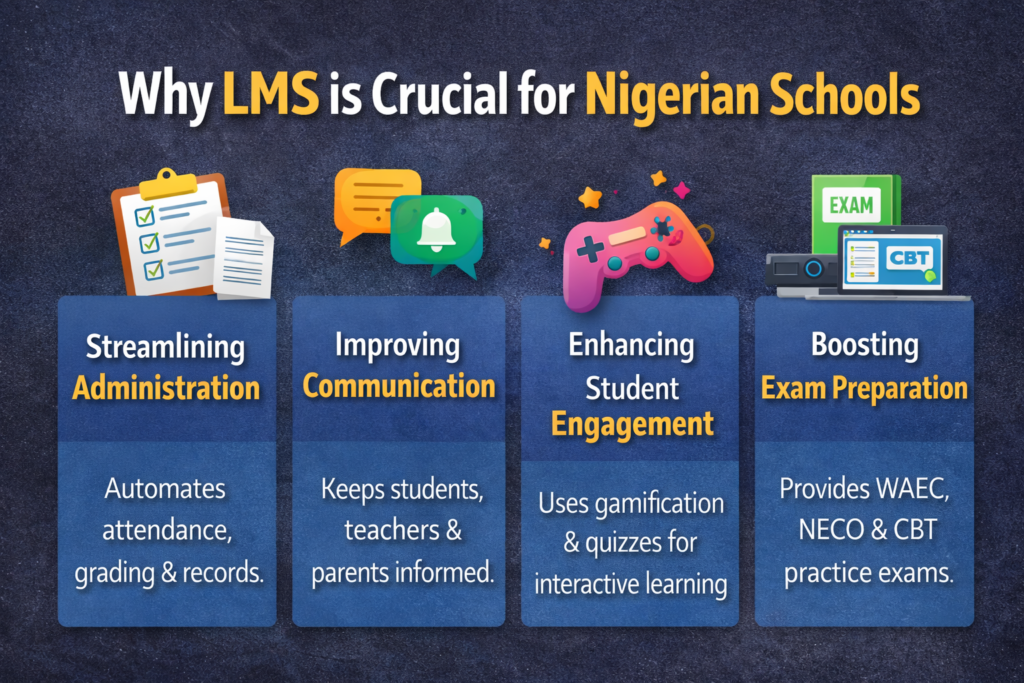
In Nigeria, schools face several challenges, from managing large student populations to ensuring that all students receive individualized attention. The introduction of school management software like LMS addresses these issues in several ways:
- Streamlining Administration: Managing attendance, grades, and academic records manually can be cumbersome. An LMS automates these processes, ensuring accurate and efficient tracking of student progress and performance.
- Improving Communication: An LMS facilitates real-time communication between students, teachers, and parents. Whether it’s sending notifications about assignments or exam results, the system ensures that all stakeholders are kept informed.
- Enhancing Student Engagement: By incorporating features like gamification, quizzes, and interactive content, an LMS keeps students engaged and motivated, making learning more fun and effective.
Key Features of an LMS for Schools in 2026
When selecting an LMS for your school, it’s important to consider the features that best serve students, teachers, and administrators. Here are some key features of an LMS for schools in 2026:
1. Online Attendance Tracking
One of the most crucial features of an LMS is the ability to track student attendance in real-time. This feature is especially beneficial in Nigeria, where managing attendance manually can lead to errors. LMS platforms automate attendance tracking, making it easy to generate reports and monitor attendance patterns over time.
2. Grading and Assessment Tools
The LMS allows teachers to create and grade assignments, quizzes, and exams online. These systems can also generate performance reports, helping educators provide timely feedback to students. The online grading system ensures that teachers can focus on pedagogy while the system handles calculations.
3. Interactive Learning Tools (Gamification)
Gamification is becoming a key feature in modern school management systems, encouraging students to engage with learning materials through points, badges, and levels. By making learning more interactive, gamification boosts motivation and helps improve retention.
4. Real-Time Analytics and Reporting
Data-driven insights are central to improving student outcomes. An LMS provides learning analytics, enabling educators to monitor student progress, track learning trends, and identify areas for improvement. Performance-tracking software within LMS platforms enables more personalized learning experiences.
5. Integration with School Management Software
An LMS can be integrated with other school management systems, enabling seamless data flow. For example, integrating an LMS with student information systems enables automatic updates to grades, attendance, and other critical student data.
How AI, Gamification, and Analytics are Shaping the Future of LMS in 2026
The future of LMS is powered by emerging technologies such as AI, gamification, and data analytics. These technologies are making LMS platforms more intelligent, interactive, and personalized.
1. AI-Driven Personalization
AI technology enables learning management systems to adapt content based on individual student performance. AI algorithms can assess a student’s learning style, identify strengths and weaknesses, and personalize the content accordingly. This helps students in Nigeria who may face different learning challenges based on their backgrounds.
2. Gamification for Engagement
As mentioned earlier, gamification is becoming an integral part of LMS platforms for schools. By incorporating game-like elements into the curriculum, LMS platforms increase student participation and motivation. Students earn rewards, points, and badges as they progress through courses, making learning more engaging.
3. Learning Analytics for Data-Driven Decisions
Data analytics helps educators make informed decisions about course design and student interventions. By analyzing trends in student performance, LMS platforms provide actionable insights, enabling schools to identify at-risk students and offer tailored support. Analytics also help administrators track key metrics such as attendance rates, grading patterns, and course completion times.
How to Choose the Best LMS for Your School in 2026
Selecting the right school LMS can be daunting, especially with the numerous options available. Here’s what to consider when making your choice:
1. Scalability
Your school’s needs will change over time, so it’s important to choose an LMS that can scale with your growth. Look for LMS platforms for Nigerian schools that allow for easy upgrades and the addition of new features as needed.
2. User-Friendliness
An LMS should be easy to use for all users – from administrators to teachers and students. Look for platforms with an intuitive interface that minimizes the learning curve.
3. Integration with Other School Systems
Your school management software should integrate seamlessly with other platforms you already use, such as fee management systems and student portals. This ensures a smooth flow of data across your entire school ecosystem.
4. Support and Training
Ensure the LMS provider offers excellent customer support and training materials. This is especially important in Nigeria, where schools may require additional assistance during the initial setup and training phases.
5. Affordability
While features are important, pricing should also be a consideration. Choose an LMS that fits your school’s budget, especially if you’re managing multiple campuses. Some platforms offer flexible payment plans or pricing based on the number of users, helping schools better manage costs.
Pricing Models for LMS in Nigeria
LMS pricing in Nigeria varies depending on the platform, features, and the number of users. Below are the common pricing models:
- Subscription-Based Pricing: Most LMS platforms charge a subscription fee, either monthly or annually. Prices range from ₦50,000–₦100,000 per year for basic systems, with more advanced platforms priced at ₦150,000–₦500,000 annually.
- Per-Student Pricing: Some platforms charge based on the number of students enrolled. This model is suitable for schools with fluctuating student populations. Pricing ranges from ₦1,000 to ₦5,000 per student per year.
- On-Premise Licensing: For schools opting for self-hosted LMS platforms, upfront costs can range from ₦200,000 to ₦1 million, depending on customization and infrastructure needs.
Conclusion
As we move toward 2026, LMS platforms for schools in Nigeria will continue to evolve, offering more advanced features like AI-driven learning, gamification, and data analytics. By choosing the right school management software, schools can enhance their operational efficiency, improve student engagement, and make data-driven decisions that lead to better educational outcomes.
If you’re ready to take your school into the digital age, try Excel Mind’s LMS platform for a seamless and efficient school management experience.
Key Takeaways
- LMS platforms are essential for streamlining school operations and improving student outcomes.
- Features like AI, gamification, and analytics will be crucial in 2026.
- Choose an LMS that is scalable, user-friendly, and integrates well with other systems.
- Consider both pricing and features when selecting an LMS for your school.
FAQs
- What is an LMS?
An LMS (Learning Management System) is software used by schools to manage and deliver educational content, track student progress, and streamline administrative tasks. - How can LMS benefit Nigerian schools?
LMS platforms help Nigerian schools manage attendance, grades, and student data more efficiently, improving overall school operations and student engagement. - What features should I look for in an LMS?
Key features to look for include online attendance tracking, grading tools, e-learning platforms, gamification, learning analytics, and seamless integration with school management systems. - What are the pricing models for LMS in Nigeria?
LMS pricing in Nigeria can be based on a subscription model, per-student pricing, or on-premise licensing, with costs ranging from ₦50,000 to ₦500,000 annually, depending on the platform and features.